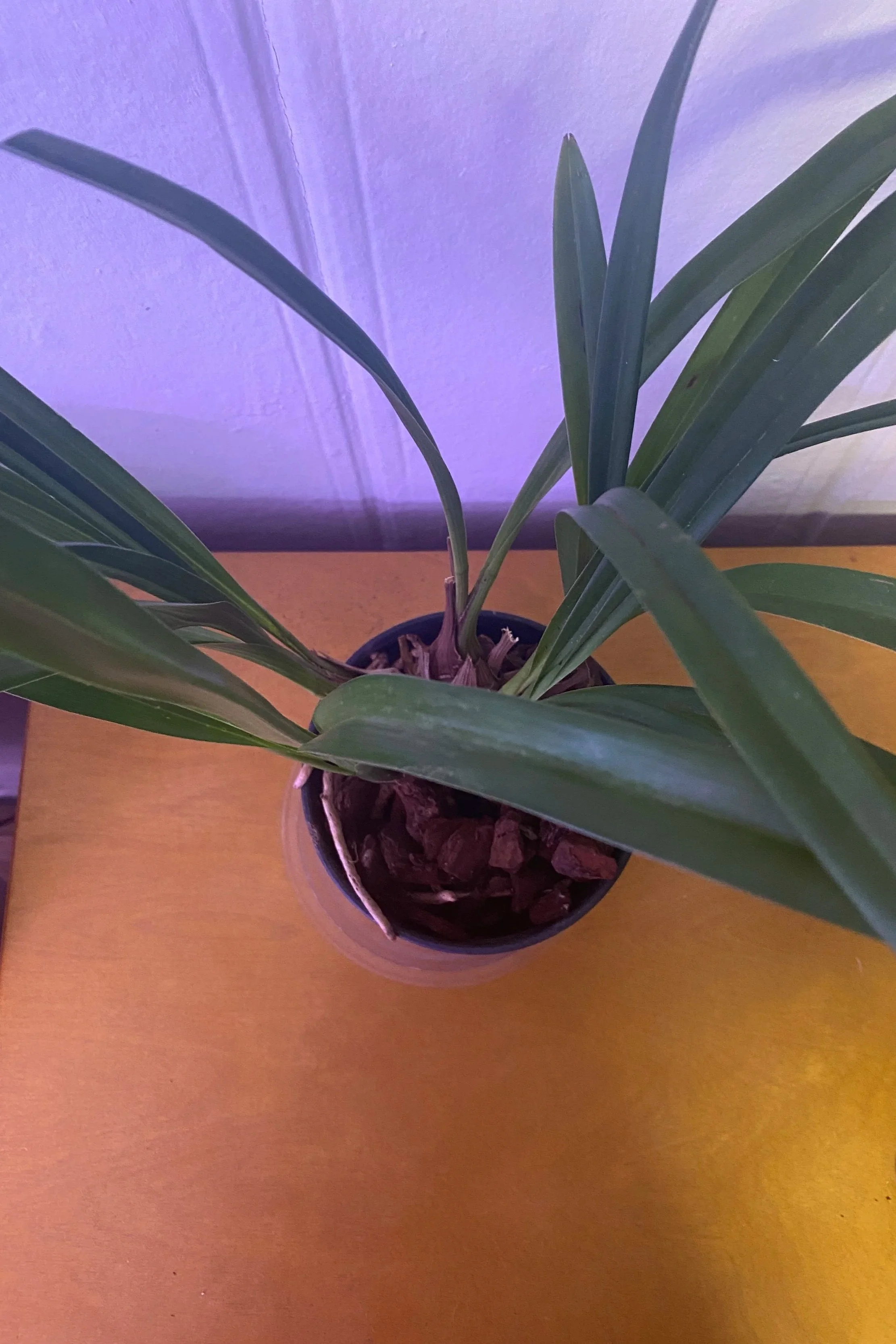
Image 1 of 4
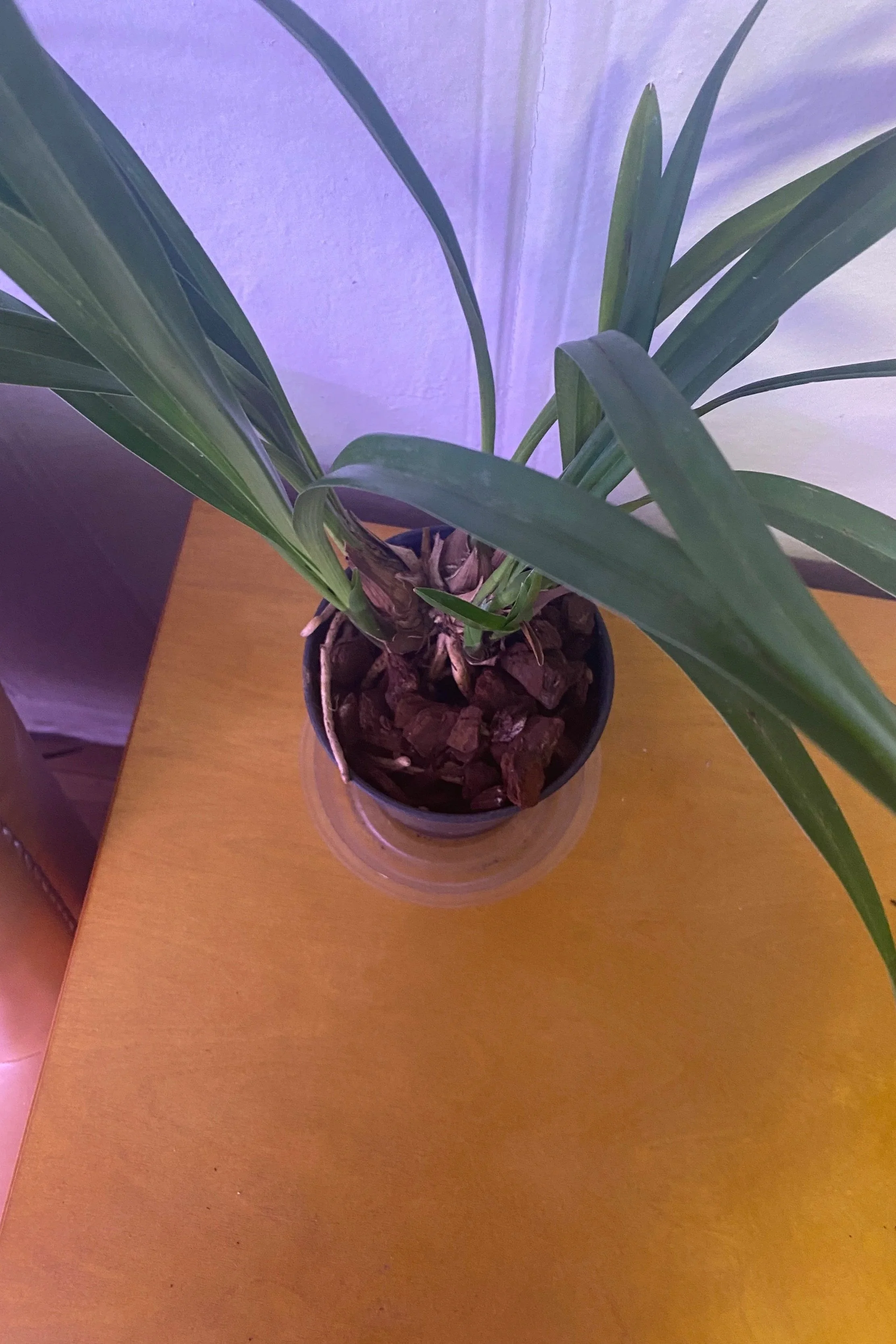
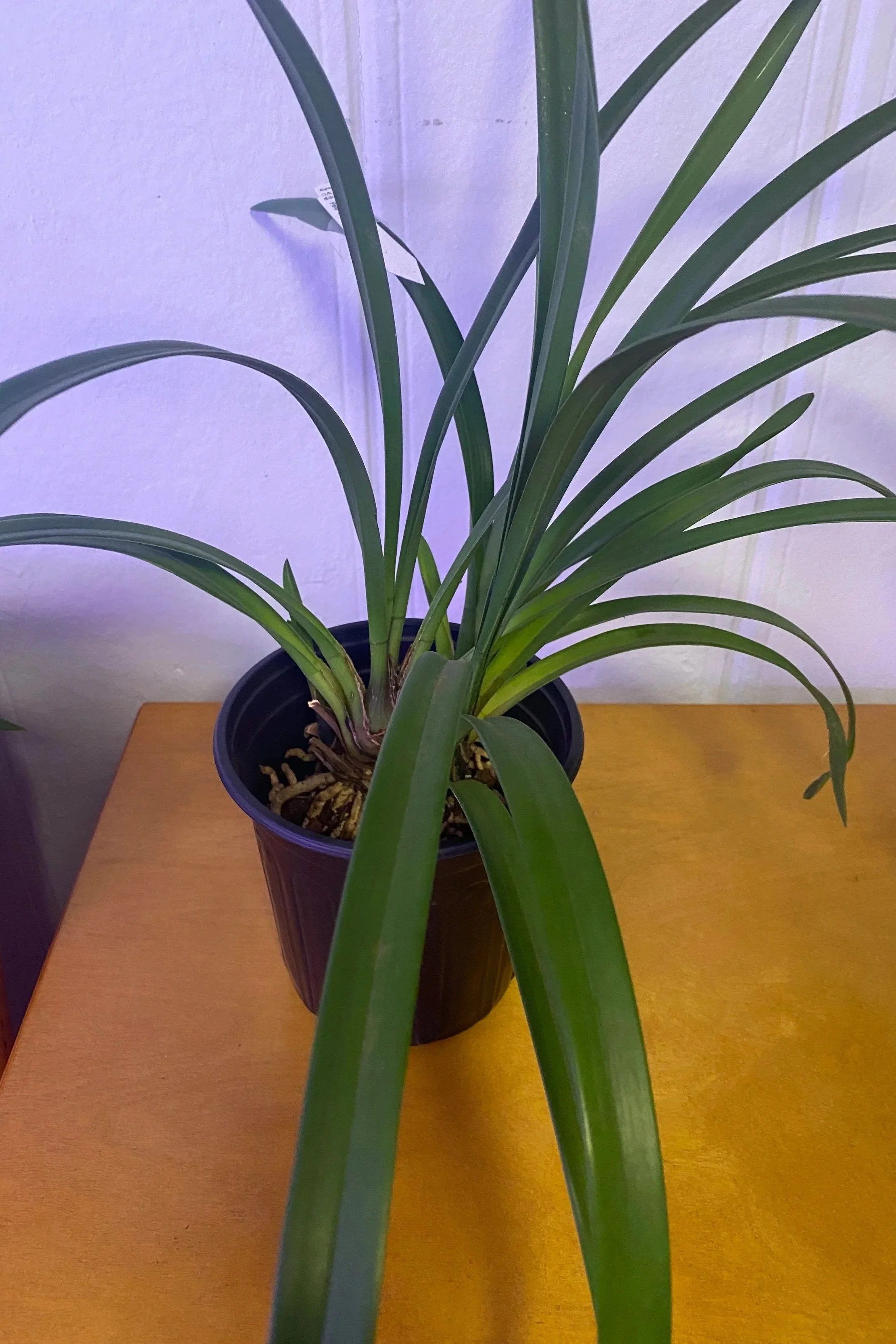 Image 2 of 4
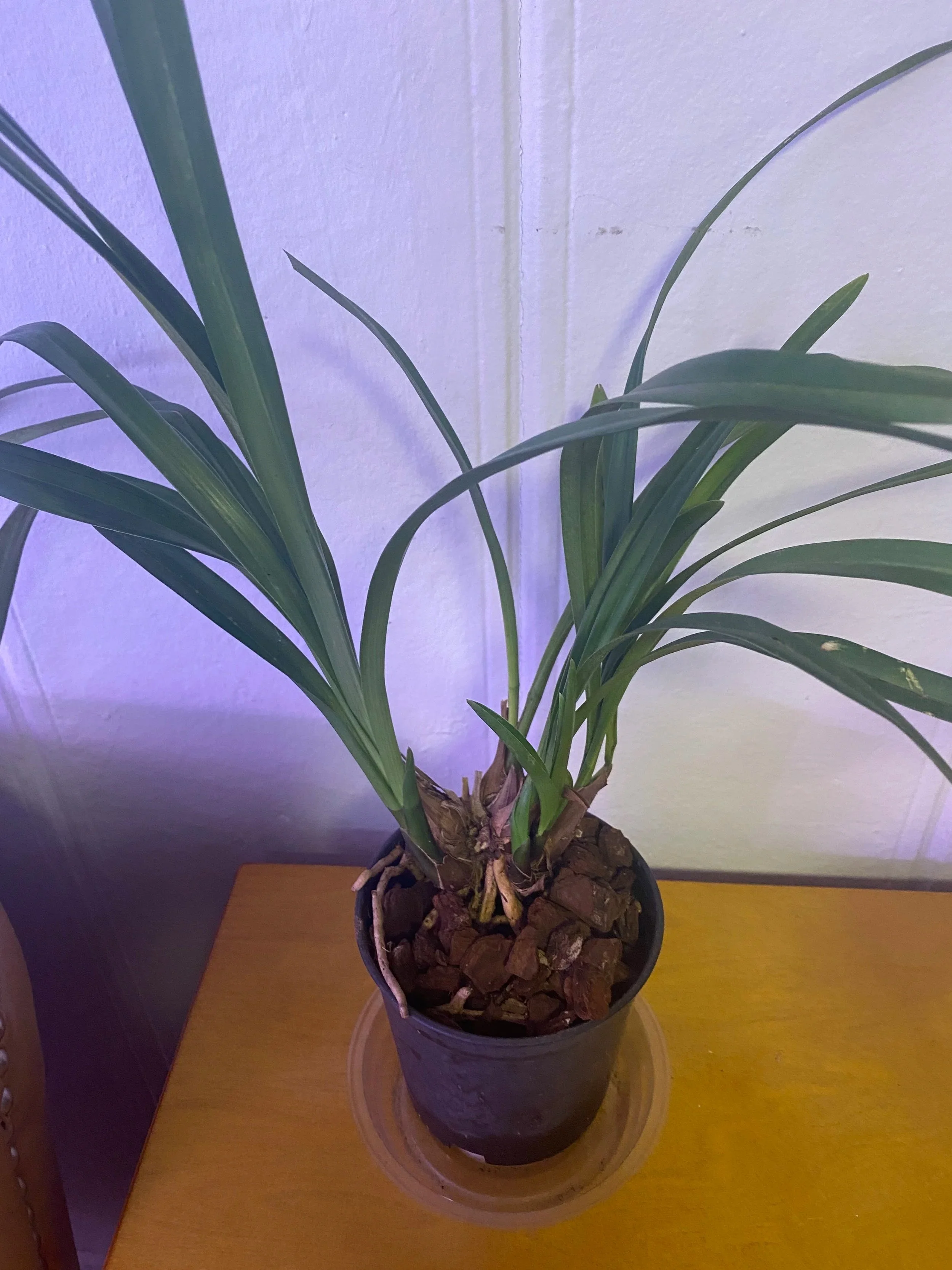
 Image 3 of 4
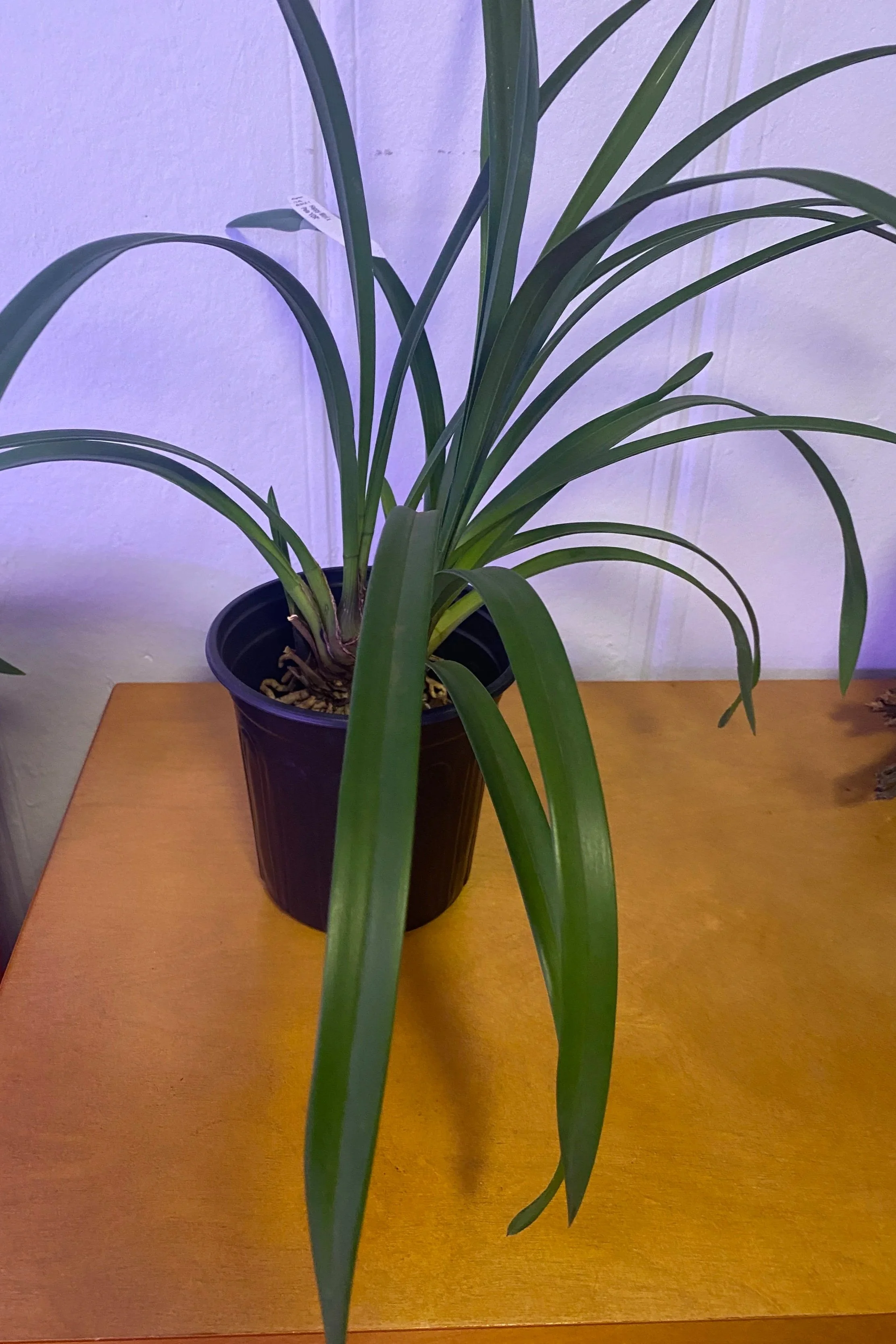 Image 4 of 4
Caring for your Elderberry Wine Cymbidium
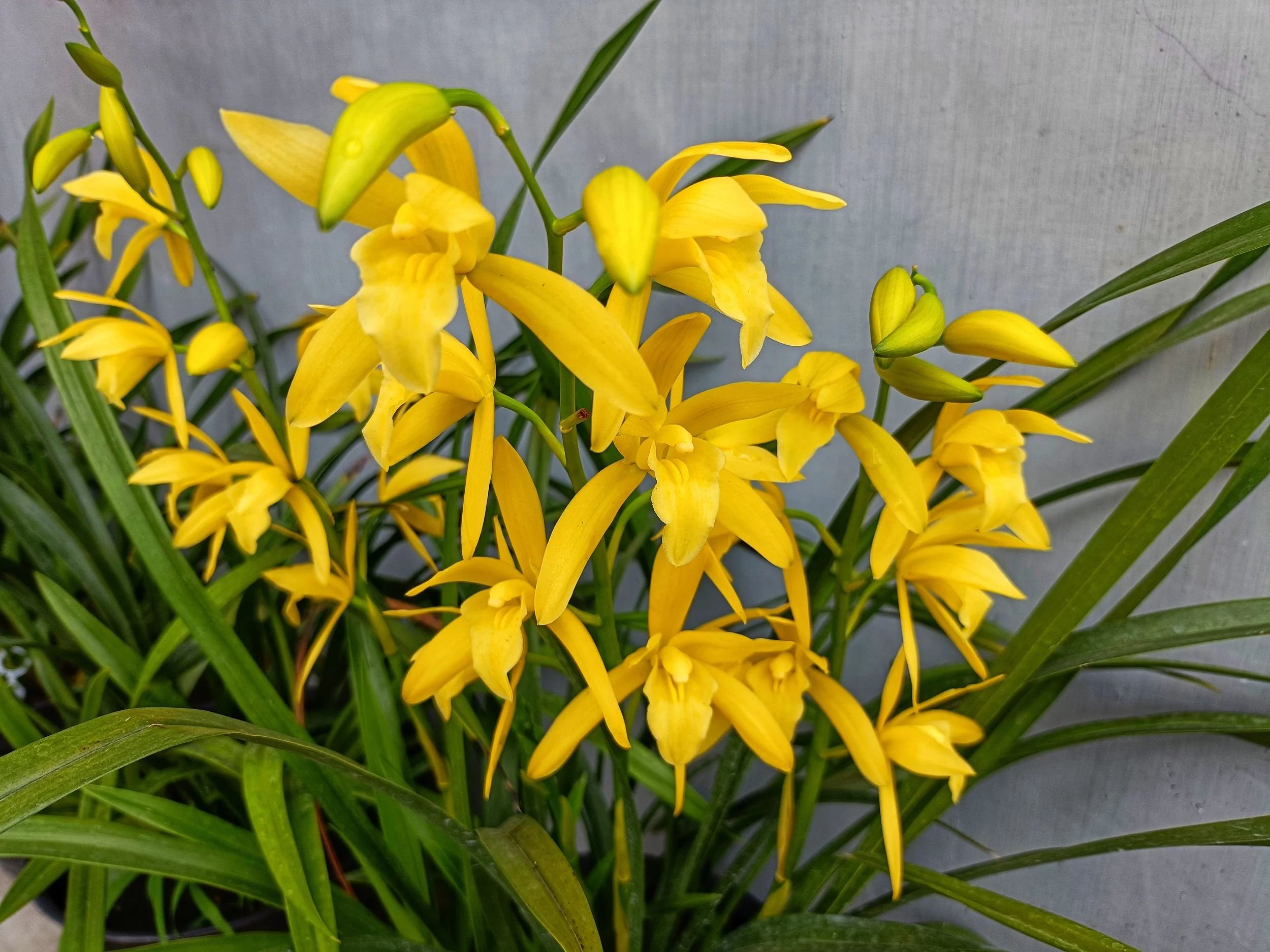
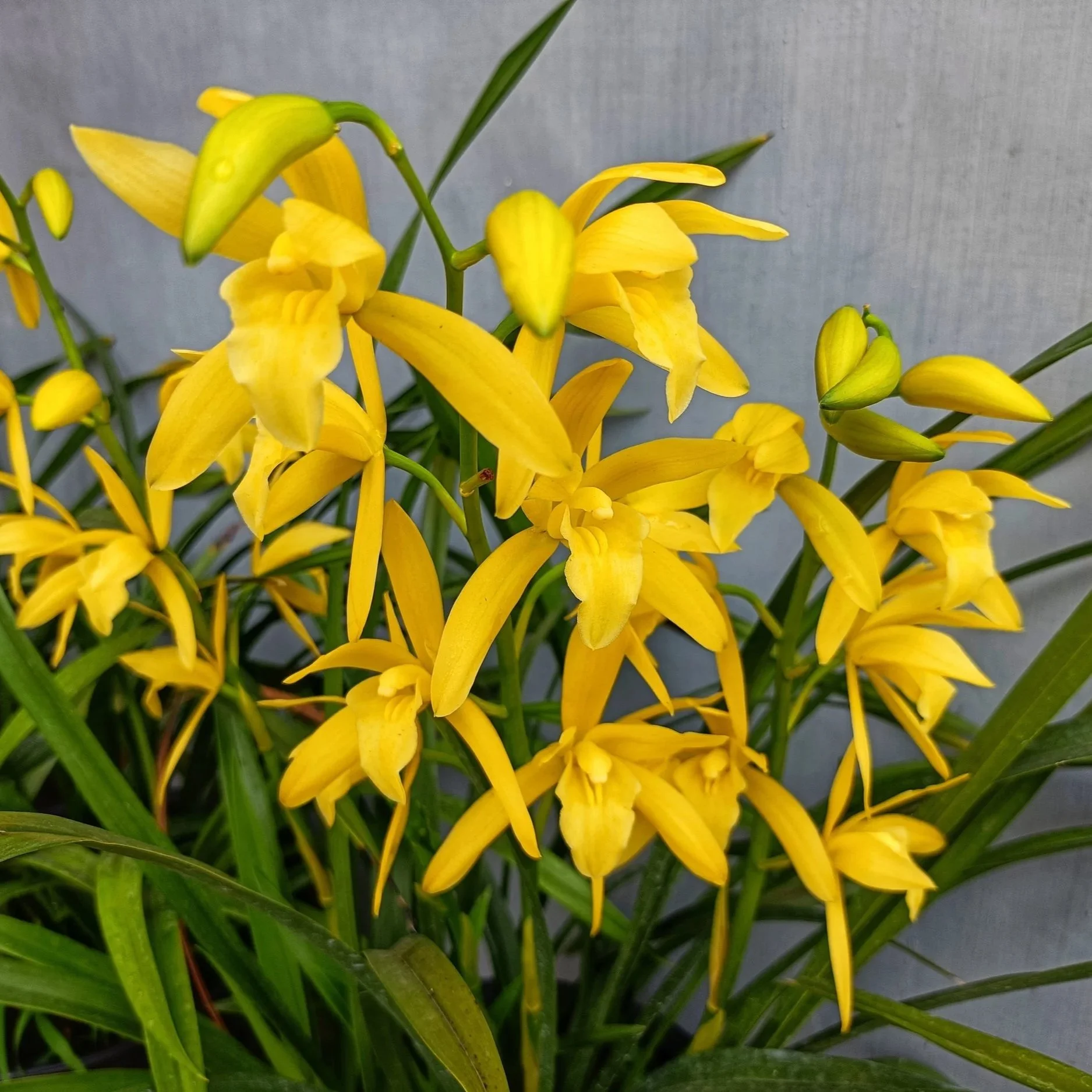
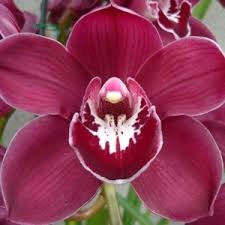
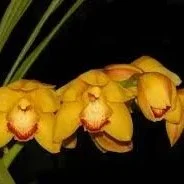
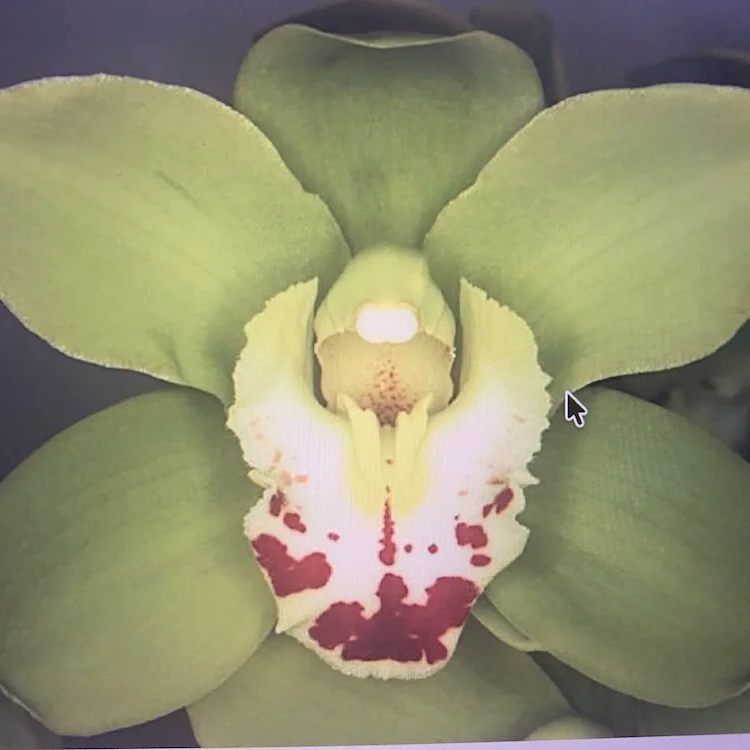
Elderberry Wine is a striking Cymbidium with deep, wine-colored blooms. To keep it healthy and encourage strong flowering, follow these care guidelines.
Light
Bright, indirect light is best. Morning sun or filtered afternoon light works well.
Avoid hot, direct midday sun; leaf scorch can occur. In brighter winter light, protect from prolonged direct sun.
A south-facing window with a sheer curtain or an east/west exposure is ideal. Aim for 2,000–4,000 foot-candles of light if measuring.
Temperature
Cymbidiums prefer cooler nights than days. Day: 65–75°F (18–24°C). Night: 50–60°F (10–16°C).
A 10–15°F drop at night during late summer–early fall helps initiate flower spikes.
Avoid sudden cold drafts below 40°F (4°C) and avoid placing near heat vents.
Humidity & Airflow
Maintain 40–60% relative humidity. Use a humidity tray or room humidifier if indoor air is dry.
Provide gentle air circulation to prevent fungal issues—ceiling fans or a low-speed oscillating fan set away from the plant.
Watering
Keep the potting mix evenly moist during active growth (spring–summer), but not waterlogged.
Water thoroughly, allowing excess to drain; then water again when the top 1–2 inches of the medium begin to dry.
Reduce watering in winter when growth slows; keep roots slightly drier but not bone dry.
Potting mix & Repotting
Use a well-draining, chunky orchid mix (bark, perlite, charcoal). Cymbidiums tolerate finer mix than many epiphytic orchids but still need good aeration.
Repot every 2–3 years, or when the medium breaks down, ideally after flowering and as new growth begins.
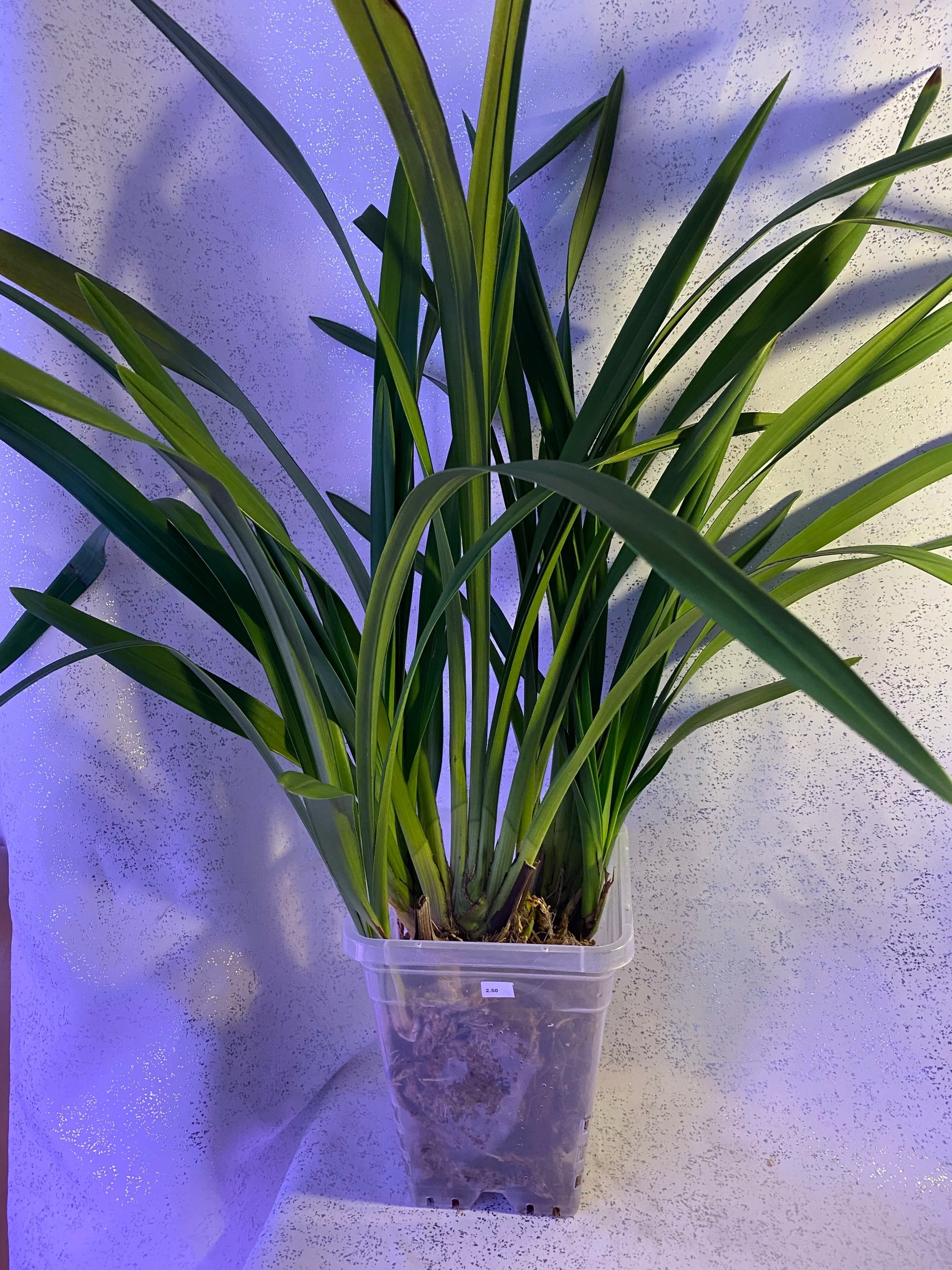
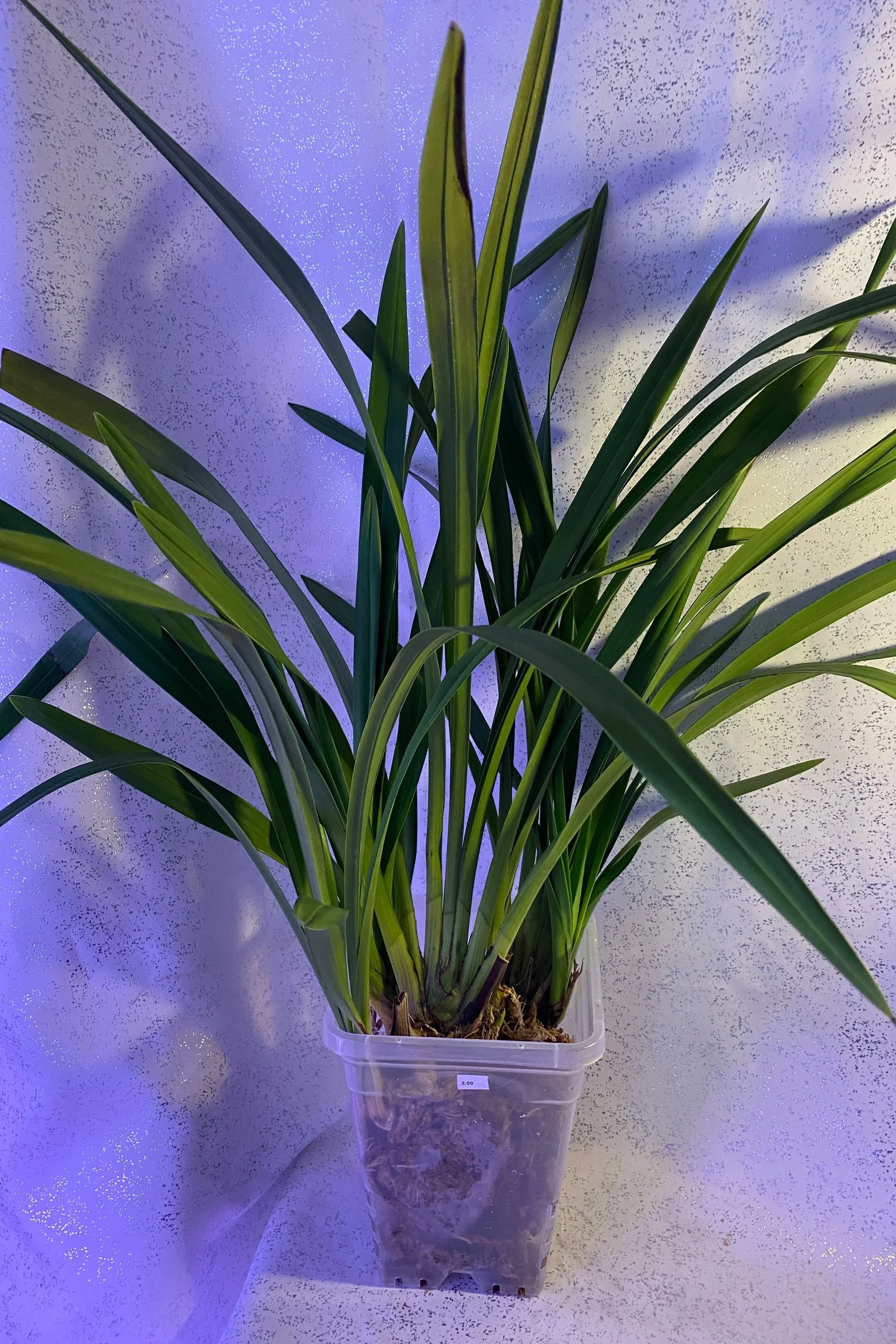
Choose a pot that allows room for new pseudobulbs but avoid excessively large containers.
Fertilizer
Feed with a balanced orchid fertilizer (such as 20-20-20) at quarter to half strength every 1–2 weeks during active growth.
In late summer–early fall, switch to a high-phosphorus bloom formula or continue balanced feed but ensure adequate potassium and phosphorus to support spike development.
Flush the pot periodically with plain water to prevent salt buildup.
Flower Spike Care
When spikes emerge, provide stable conditions: consistent light, cooler nights, and regular feeding.
Support long flower spikes with stakes to prevent breakage.
Remove faded flowers promptly to encourage further blooming and prevent disease.
Pests & Disease
Inspect regularly for scale, mealybugs, spider mites, and aphids. Treat early with insecticidal soap, horticultural oil, or appropriate systemic options.
Prevent fungal and bacterial rot by avoiding water sitting in leaf axils, ensuring good airflow, and removing dead material.
If rot appears, isolate the plant, trim affected tissue with sterile tools, and apply a fungicide if needed.
Rest Period & Seasonal Care
Cymbidiums benefit from a cooler, drier rest in winter to prepare for spring growth and flowering. Reduce water and fertilizer modestly, while maintaining humidity and light.
Ensure a consistent cool night temperature in late summer–early fall to induce flowering.
General Tips
Clean leaves occasionally with a soft, damp cloth to remove dust and allow efficient photosynthesis.
Use pots with drainage holes; avoid saucers that hold standing water.
Keep a record of when spikes form and bloom times—Cymbidium cycles can be seasonal and tracking helps optimize care for future years.
If you purchased your Elderberry Wine Cymbidium from O’Dowds Orchids and need specific advice about its current condition, let us know its potting medium, recent watering schedule, and any visible pests or spots on leaves—happy to help you troubleshoot.